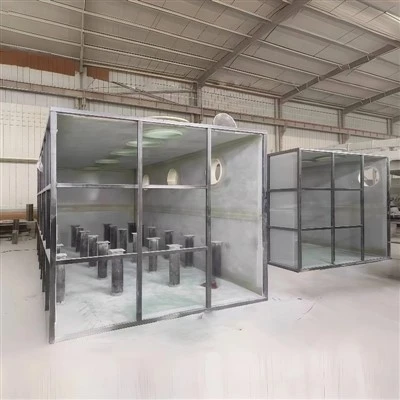
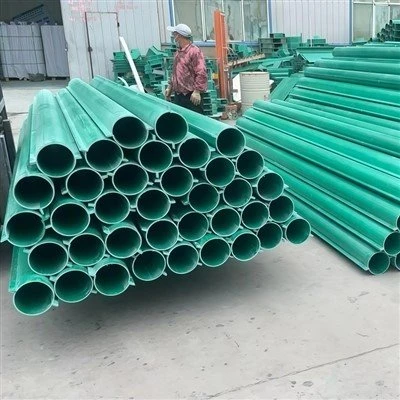
In the fiberglass mold manufacturing industry, dimensional accuracy directly impacts product quality and subsequent performance in application. Whether for automotive components, architectural ornamentation, or industrial equipment manufacturing, dimensional deviations in molds can lead to the rejection of entire production batches. Today, we will provide a detailed analysis of the dimensional requirements and manufacturing specifications for fiberglass molds.
1. Control of Basic Dimensional Tolerances
Length and Width: ±0.5 mm (Applicable to standard products)
Height and Depth: ±0.3 mm (Applicable to molds requiring high precision)
Arc Radius: ±0.2 mm (Requires rigorous control for parts with complex curved surfaces)
Taking an automotive parts manufacturer in Shijiazhuang as an example: for their custom-made fiberglass bumper molds, verification using a Coordinate Measuring Machine (CMM) confirmed that all critical dimensions were maintained within a tolerance of ±0.4 mm, thereby boosting their product pass rate to 99.2%.
2. Structural Dimension Design Principles
Shrinkage Allowance: Fiberglass undergoes a shrinkage rate of approximately 5%–8% after curing; therefore, a compensatory allowance must be incorporated during the design phase.
Parting Line Precision: The flatness error of the mold parting surface must be ≤ 0.1 mm/m to prevent material overflow and flashing.
Wall Thickness Uniformity: For complex parts, the variation in wall thickness must be controlled within ±10% to prevent deformation during curing.
3. Requirements for Specific Application Scenarios
Architectural Decoration Molds: Must comply with the GB/T 18353-2012 standard, with splicing joint errors limited to ≤ 0.5 mm.
Wind Turbine Blade Molds: Length tolerance must be ≤ ±1 mm, and overall straightness deviation must be ≤ 0.3 mm/m.
Medical Equipment Molds: Surface roughness must meet Ra ≤ 0.8 μm, and dimensional tolerances must comply with the ISO 13485 standard.
4. Manufacturing Process Quality Assurance Measures
CNC Machining: Utilization of 5-axis simultaneous machining centers to ensure the precision of complex curved surfaces.
Mold Temperature Control: Given the significant temperature fluctuations in the Shijiazhuang region, molds must incorporate allowances to compensate for thermal expansion and contraction.
Mold Trial Verification: New molds require a minimum of three trial runs, with dimensional deviations corrected after each trial.
5. Solutions for Common Dimensional Issues
| Issue Type | Root Cause | Solution
| Dimensional Out-of-Spec | Incorrect calculation of mold shrinkage rate | Optimize the resin formulation; increase curing accelerator content.
| Parting Line Misalignment | Mold installation deviation | Use a laser alignment device to calibrate installation datum points.
| Uneven Wall Thickness | Unstable core mold support | Incorporate 3D-printed positioning fixtures.
6. Summary
Dimensional control in fiberglass mold manufacturing is a systemic engineering process that requires strict oversight across the entire workflow-from design, material selection, and processing to final inspection.