Pultruded Fiberglass Profiles for Industrial and Structural Applications
Fiberglass profiles, also known as fiber-reinforced polymer (FRP) profiles, are composite structural shapes manufactured from reinforcing fibers and a thermoset resin matrix. Common profile types include structural channels, angles, I-beams, square tubes, rectangular tubes, and other custom cross-sections.
Pultruded FRP profiles are produced by pulling continuous fiber reinforcements through a resin impregnation system and a forming die. This manufacturing method ensures consistent cross-sectional geometry suitable for continuous production runs. Depending on the product design, resin system, and reinforcement arrangement, profiles can be specified for applications requiring corrosion resistance, electrical insulation, or reduced structural dead weight.
Available configurations include polyester- or vinyl ester-based resin systems, specified colors, surface finishes, and custom profile dimensions subject to engineering review and manufacturing capabilities.
-
![Stainless Steel Water Tank]() Stainless Steel Water TankThe tank combines a washable interior with configurable fittings. Capacities range from 1–1000 m³ in 304 or 316L stainless steel.
-
![FRP Dissolved Oxygen Cone]() FRP Dissolved Oxygen ConeThe composite cone brings oxygen into circulating water. Configurations cover 18–140 m³/h, with a working pressure of 0.25 MPa.
-
![FRP Squatting Pan]() FRP Squatting PanThe molded composite shell is lightweight and moisture resistant. Standard sizes are 800 × 800 mm and 900 × 900 mm.
-
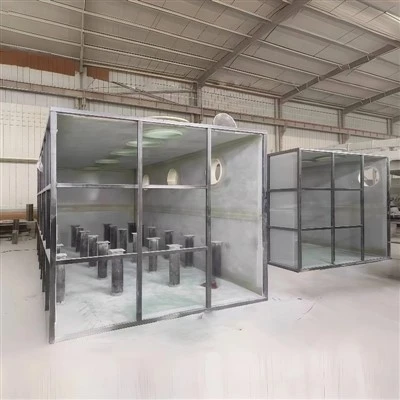
![FRP Electrolytic Cell]() FRP Electrolytic CellThe FRP Electrolytic Cell is a rectangular fiberglass-reinforced process vessel designed for electrolyte circulation, reaction, and metal-treatment lines.Its continuous corrosion barrier, reinforced
-
![Biological Deodorization Box]() Biological Deodorization BoxOur biological deodorization box is lightweight, high-strength, and resistant to corrosion and aging, with excellent sealing properties that ensure long-term, stable operation.
-
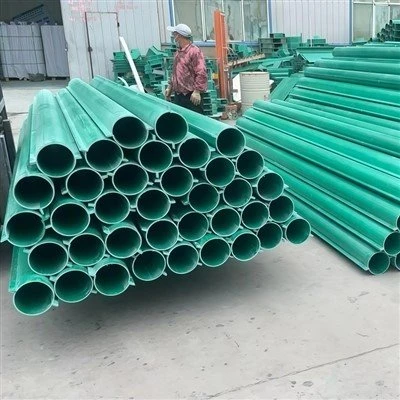
![FRP Cable Conduit]() FRP Cable ConduitCorrosion and aging resistant;Good insulation properties:non-conductive and non-magnetic;High compressive strength:resistant to cracking and deformation;Good sealing performance.
-
![FRP Anchor Bolt]() FRP Anchor BoltLightweight, High-Strength, and Corrosion-ResistantInsulating and Aging-ResistantEasy Installation and Strong Anchorage
-
![FRP Bolt]() FRP BoltLightweight yet high-strength; corrosion- and aging-resistantNon-conductive and non-magnetic; insulating and rust-proofEasy to install; can be cut and customized
-
![FRP Sound Barrier]() FRP Sound BarrierExcellent sound insulation performanceCorrosion and UV resistantFire-retardant and durable
-
![FRP Anti-Glare Net]() FRP Anti-Glare NetLightweight yet high-strength; corrosion- and UV-resistantAnti-glare and breathable; non-conductive and rust-proofEasy to install; customizable mesh size
-
![Fiberglass FRP Tanks]() Fiberglass FRP TanksOur fiberglass frp tanks are highly customizable in capacity, dimensions and coatings to fit diverse industrial storage needs. Available in vertical and horizontal designs for easy installation and
-
![FRP Filter Tank]() FRP Filter TankWe recommend frp filter tank for a bunch—water treatment, chemical plants, food and pharmaceutical factories, even municipal projects. It’s great for filtering drinking water, treating industrial


Key Features and Benefits
Corrosion Resistance: FRP profiles can be specified for environments where conventional metal components require frequent corrosion protection. Actual chemical resistance depends on the resin formulation, reinforcement architecture, surface barrier veil, chemical concentration, temperature, and exposure duration. Confirm operating conditions prior to resin system selection.
High Strength-to-Weight Ratio: Fiberglass profiles combine fiber reinforcement with a polymer matrix to provide high structural load capacity at a reduced material weight. Suitability as an alternative to steel or aluminum depends on profile geometry, loading direction, stiffness requirements, connection design, and structural calculations.
Electrical Insulation: FRP profiles provide electrical insulation when material formulations and finished products match operational requirements. Electrical performance should be verified against operating voltage, environmental contamination risks, and applicable electrical standards.
Thermal Expansion Characteristics: FRP profiles exhibit directional thermal expansion due to fiber orientation and resin formulation. Longitudinal and transverse expansion rates differ, requiring careful consideration during the design of supports, joints, and connections.
Outdoor & Low-Maintenance Durability: FRP profiles are engineered for long-term outdoor exposure. UV resistance, color retention, surface condition, and weathering performance depend on the resin system, surface veil/coating, and exposure environment.
Custom Profile Design: Custom cross-sections are developed from approved engineering drawings following feasibility evaluations. Tooling requirements, dimensional tolerances, resin selection, color matching, and production volumes are reviewed prior to contract finalization.
Technical Specifications
|
Property / Parameter |
Standard Pultruded Profile (Polyester-Based) |
High-Performance Profile (Vinyl Ester-Based) |
Verification Requirements & Standards |
|
Resin System |
Commercial grade polyester |
Fire-retardant vinyl ester |
Confirm resin manufacturer and grade |
|
Fiber Reinforcement |
Continuous E-glass roving / mat |
Continuous E-glass roving / mat |
Confirm fiber type and architecture |
|
Fiber Content |
To be confirmed by grade |
To be confirmed by grade |
ASTM D2584 (Mass / Volume fraction) |
|
Tensile Strength (Longitudinal) |
Greater than or equal to 240 MPa |
Greater than or equal to 280 MPa |
ASTM D638 (Test orientation required) |
|
Flexural Strength (Longitudinal) |
Greater than or equal to 290 MPa |
Greater than or equal to 330 MPa |
ASTM D790 (Test orientation required) |
|
Flexural Modulus |
Greater than or equal to 18.5 GPa |
Greater than or equal to 20.0 GPa |
ASTM D790 |
|
Barcol Hardness |
50 or greater (Typical) |
55 or greater (Typical) |
ASTM D2583 |
|
Water Absorption (24 hrs) |
Less than or equal to 0.4 percent |
Less than or equal to 0.25 percent |
ASTM D570 (Exposure conditioning) |
|
Density |
1.7 to 1.9 g/cm3 |
1.7 to 1.9 g/cm3 |
ASTM D792 |
|
Dimensional Tolerances |
Per profile specification |
Per profile specification |
ISO 13000-2 / Agreed engineering drawing |
Manufacturing Capabilities

Pultrusion Production
Automated pultrusion lines configured for continuous manufacturing of profiles with consistent nominal cross-sections. Line speeds and curing profiles are optimized according to die design and resin reactivity.

Resin Impregnation & Die Tooling
Closed resin impregnation systems and heated steel dies ensure controlled fiber wetting and uniform curing. Process parameters are managed to maintain structural integrity.

Custom Die Development
In-house tooling design and fabrication services support custom profile development based on approved geometry and manufacturing feasibility assessments.

Secondary Machining & Cutting
Profiles are supplied to specified lengths with optional secondary operations including precision CNC cutting, drilling, and routing based on approved engineering drawings.
Quality Control
Raw Material Verification: Incoming raw materials—including E-glass rovings and liquid resin systems—are inspected and verified against supplier specifications prior to production release.
Process Monitoring: Continuous monitoring of critical manufacturing parameters, including resin bath conditions, die temperature profiles, pulling speed, and cure rates.
Mechanical Testing: Coupon testing is available for production batches upon agreement, measuring tensile, flexural, or shear properties according to standard test methods.
Dimensional Inspection: Routine verification of cross-sectional dimensions, wall thickness, profile straightness, and cut lengths against agreed drawing tolerances.
Documentation & Traceability: Depending on supply agreements, available documentation may include material identification records, dimensional inspection reports, and safety data sheets (MSDS).
Applications
Chemical Processing & Industrial Facilities: Support skids, handrails, access walkways, and pipe support racks deployed in corrosive chemical environments. Resin selection must match specific chemical concentrations and operating temperatures.
Water & Wastewater Treatment Facilities: Access structures, walkways, handrails, and support members operating in humid or aqueous conditions subject to cleaning agents.
Marine & Offshore Engineering: Gratings, cable support systems, and structural framing exposed to saltwater environments, evaluated against project structural and fire-performance standards.
Electrical Utilities: Non-conductive structural ladders, cross-arms, and utility enclosures requiring verified electrical insulation properties and safe creepage distances.
Cooling Towers: Structural support members and access platforms exposed to continuous moisture and dynamic operational loads.
Frequently Asked Questions
We're well-known as one of the leading fiberglass products manufacturers and suppliers in China, featured by quality products and good service. Please rest assured to buy customized fiberglass products at competitive price from our factory. Contact us for more details.
Popular Products