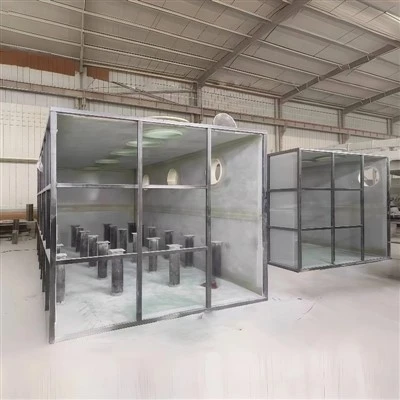
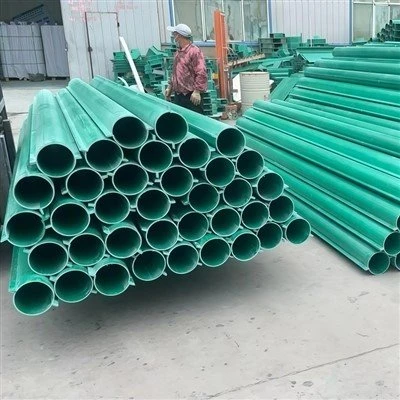
Product Overview
Fiberglass Reinforced Plastic (FRP) tanks are engineered for the bulk storage and handling of liquids in chemical processing, water and wastewater treatment, and other industrial applications. Depending on the tank design, resin system, and operating conditions, FRP construction provides exceptional corrosion resistance and a lightweight alternative to selected metallic storage systems.
Each tank is specified according to its intended service conditions, including the stored medium, chemical concentration, operating temperature, liquid density, design pressure or vacuum, and applicable environmental loads. Tank orientation, capacity, dimensions, nozzle arrangements, and installation requirements are systematically evaluated during the design stage.
We support project-specific tank configurations, subject to confirmed manufacturing capabilities and engineering requirements. Engineering support encompasses material selection, design drawings, structural calculations, and reviews of applicable wind, seismic, and chemical compatibility requirements.
-
![Fiberglass FRP Tanks]() Fiberglass FRP TanksOur fiberglass frp tanks are highly customizable in capacity, dimensions and coatings to fit diverse industrial storage needs. Available in vertical and horizontal designs for easy installation and
-
![FRP Filter Tank]() FRP Filter TankWe recommend frp filter tank for a bunch—water treatment, chemical plants, food and pharmaceutical factories, even municipal projects. It’s great for filtering drinking water, treating industrial
-
![FRP Material Water Tank]() FRP Material Water TankOur frp material water tank cover a wide capacity range with standard optional panel sizes, and support insulation layer customization to meet diverse use requirements. Manufactured with high-quality
-
![Stainless Steel Square Water Tank]() Stainless Steel Square Water TankOur Stainless steel square water tank is fully customizable in capacity, dimensions and coatings to meet diverse industrial storage needs, with vertical and horizontal options for flexible


Key Features
Corrosion-Resistant Construction: The resin system and inner corrosion barrier are selected precisely according to the stored medium and operating conditions, ensuring chemical compatibility for each application.
Filament-Wound Structure: Computer-controlled filament winding manufactures cylindrical tank shells with controlled fiber placement. Winding patterns and laminate designs are tailored to tank geometry and structural requirements.
Lightweight Construction: FRP tanks feature a lower material density than steel tanks, simplifying handling and transport logistics. Foundation, lifting, and transport requirements are fully assessed for every vessel.
Flexible Design Options: Tank capacity, orientation, connections, manways, and support arrangements are customized according to project specifications and manufacturing limits.
Application-Specific Material Selection: Resin systems and reinforcement structures are engineered based on chemical exposure, thermal limits, mechanical loading, and the intended service environment.
Comprehensive Engineering Support: General arrangement drawings, design calculations, and supporting technical documentation are provided according to the agreed project scope.
Technical Specifications
|
Parameter |
Specification / Selection Basis |
|
Tank Type |
Vertical or horizontal; other configurations subject to design review |
|
Capacity |
Project-specific; confirmed against available manufacturing range |
|
Diameter & Height |
Based on required capacity, installation space, transport limits, and manufacturing capability |
|
Design Conditions |
Atmospheric, pressure, or vacuum service as specifically designed and verified |
|
Resin Systems |
Polyester, vinyl ester, epoxy, or other compatible systems subject to application requirements |
|
Reinforcement |
Glass fiber rovings, chopped strand mat, woven reinforcement, surface veil, or specified materials |
|
Inner Corrosion Barrier |
Material composition and thickness engineered based on chemical service and design requirements |
|
Nozzles & Connections |
Sizes, flange standards, locations, and reinforcement based on process and piping requirements |
|
Design Standards |
Applicable standards agreed upon according to tank type, construction method, and service conditions |
|
Accessories |
Manways, vents, level connections, supports, ladders, and platforms subject to project requirements |
Manufacturing Capabilities
FRP tank manufacturing methods are selected strictly according to tank geometry, dimensions, structural requirements, and intended service conditions:
Filament Winding: Continuous glass fiber rovings are wound onto a mandrel according to specified winding patterns and laminate designs, tailored to individual tank requirements.
Contact Molding and Hand Lay-up: Utilized for tank components, complex geometries, local reinforcement, and features requiring a distinct manufacturing approach from the wound shell.
Inner Corrosion Barrier Fabrication: The liner system is specified based on the chemical environment and compatible resin/reinforcement materials, governing laminate composition, consolidation, curing, and inspection.
Curing and Post-Curing: Controlled thermal procedures are applied in accordance with material supplier recommendations and approved production procedures.
Custom Openings and Accessories: Nozzles, manways, and structural supports are arranged according to approved drawings and relevant structural guidelines.

Quality Control
Quality-control protocols are defined according to agreed specifications, applicable standards, and documented factory procedures:
Raw Material Verification: Review of resin and reinforcement specifications and supplier documentation.
Process Control: Monitoring of manufacturing parameters, material usage, and curing conditions.
Hardness Testing: Barcol hardness testing performed where specified and appropriate for material inspection.
Glass Content Testing: Laminate glass content evaluated using agreed test methods, with measurement bases clearly identified.
Dimensional Inspection: Verification of specified dimensions, wall thicknesses, and nozzle locations against drawing requirements.
Leak or Pressure Testing: Performed when required by tank design, applicable standards, and approved inspection plans, with specified test mediums and acceptance criteria.
Inspection Documentation: Inspection reports, material records, test results, and certificates provided according to the quality plan and contract requirements.

Applications
FRP tanks are implemented across critical industrial sectors, subject to verified chemical compatibility and operating conditions:
Chemical Processing: Storage of mineral acids, alkalis, salt solutions, and process chemicals following rigorous resin compatibility verification.
Water and Wastewater Treatment: Storage of water treatment chemicals, process liquids, and municipal or industrial wastewater streams.
Power Generation and Flue Gas Treatment: Process-liquid and slurry storage duties within environmental emission control systems, evaluated for abrasion, temperature, and chemical exposure.
Desalination and Marine Facilities: Storage of seawater intake streams, reverse osmosis (RO) reject brine, and chemical dosing solutions.
Industrial Process Systems: Integration into chemical dosing skids, treatment plants, and process installations requiring customized storage solutions.

Frequently Asked Questions
We're well-known as one of the leading FRP tanks manufacturers and suppliers in China, featured by quality products and good service. Please rest assured to buy customized FRP tanks at competitive price from our factory. Contact us for more details.
canature frp tank, glass reinforced plastic water tanks, Frp Material Water TankPopular Products