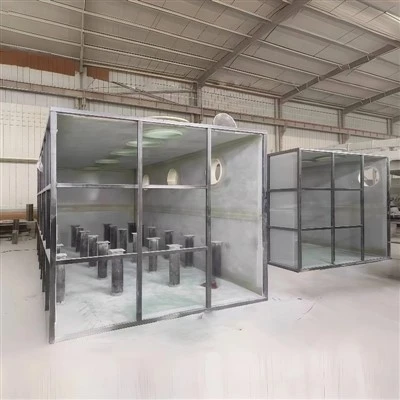
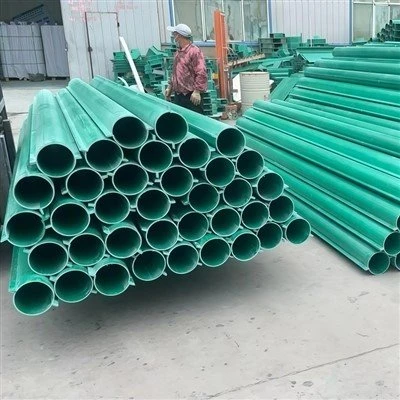
The creation of a high-performance FRP (Fiber-Reinforced Polymer) mold involves a comprehensive process chain, spanning from design and material selection to manufacturing techniques. Taking the production workflow of a specialized FRP mold manufacturer as an example:
1. Requirements Analysis and Design Phase: The manufacturer begins by engaging in in-depth consultations with the client to define key parameters, such as the mold's intended application (e.g., mass production vs. small-batch customization), dimensional accuracy requirements, and temperature and pressure resistance ratings. For instance, molds customized for medical equipment must meet sterile environment standards, whereas molds for architectural decoration require careful consideration regarding the fidelity of surface texture reproduction. The design team utilizes CAD software to create 3D models and employs CAE simulation to analyze the mold's stress distribution, thereby optimizing its structural integrity to prevent deformation.
2. Material Selection and Formula Optimization: Based on the mold's operating conditions, appropriate resin types-such as unsaturated polyester resin for room-temperature curing or epoxy resin for high-temperature environments-and fiberglass specifications are selected (e.g., chopped strands to enhance toughness, continuous fibers to boost tensile strength). One manufacturer, while developing molds for high-speed train components, successfully reduced the mold's shrinkage rate from the industry standard of 0.3% down to 0.1% by precisely adjusting the resin-to-fiber ratio, thereby significantly improving product consistency.
3. Mold Manufacturing Processes: Mainstream manufacturing techniques include hand lay-up, spray-up, and vacuum infusion molding. Hand lay-up is suitable for small-batch production and molds with simple structures; while cost-effective, it offers limited precision. Spray-up involves mixing resin and fibers via a mechanical spray gun, boosting efficiency by over 30%. Vacuum infusion molding utilizes negative pressure to ensure the uniform impregnation of resin throughout the fiber layers, enabling thickness control with an accuracy of 0.05 mm; this method is frequently employed for automotive body panel molds. After introducing imported German equipment, one FRP mold manufacturer successfully reduced its mold production cycle from 15 days to 7 days, while simultaneously lowering the defect rate from 8% to less than 2%.
4. Post-Molding Processing and Inspection: Once molded, the molds undergo various surface treatments-such as sanding, polishing, and painting. Additionally, certain precision molds require verification through laser scanning inspection. A manufacturer has equipped its facility with a Coordinate Measuring Machine (CMM) capable of verifying parameters such as mold flatness and perpendicularity, thereby ensuring that the dimensional deviation of every mold does not exceed ±0.05 mm-meeting aerospace-grade standards.