The "Dynamic Duo" of the Molding World
In the production of fiberglass products, the female mold and the male mold act like a perfectly synchronized pair:
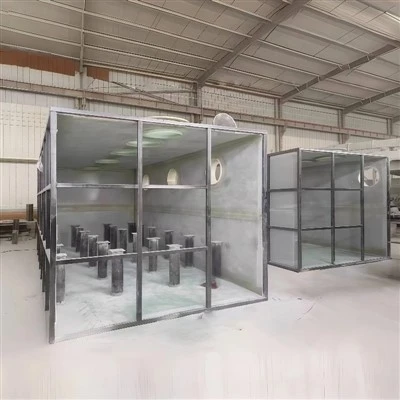
Female Mold: A concave mold-resembling the recessed grooves of a seal-used to shape the *exterior* surface of a product. It is commonly employed in the creation of complex shapes such as boat hulls and sculptures.
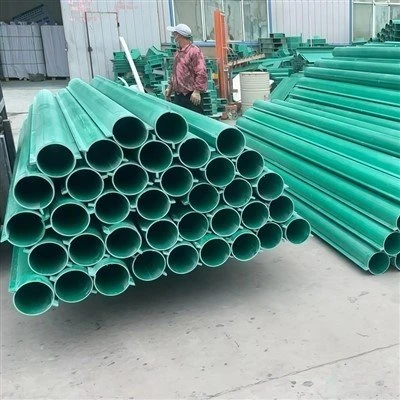
Male Mold: A convex mold-resembling the raised relief of a seal-used to form the *interior* cavity of a product. It is ideal for items requiring high precision in their inner walls, such as pipes and containers.
The choice between the two depends on whether the product requires greater control over its *external contours* (using a female mold) or its *internal structure* (using a male mold).
The Practical Secrets of Female and Male Molds
This molding "couple" each possesses its own unique strengths:
Molding Efficiency: Female molds are well-suited for open-face molding processes, allowing for rapid demolding. Male molds excel at creating deep-cavity structures while ensuring uniform wall thickness.
Surface Quality: The female mold directly determines the product's *exterior* appearance and typically requires a mirror-finish polish. The male mold, conversely, focuses on the smoothness of the *interior* walls.
Cost Control: Simple structures can often be produced using a single mold type, whereas complex components may necessitate the combined use of both female and male molds.
The Three Golden Rules of Mold Selection
Trying to decide whether to use a female or a male mold? Keep these three dimensions in mind:
Consider Function: For aesthetic components (exterior parts), prioritize the female mold; for load-bearing components, consider the male mold.
Consider Structure: For parts featuring outward-facing flanges, select the female mold; for parts requiring internal grooves or recesses, the male mold is essential.
Consider Production Volume: For small-batch production, a female mold combined with manual finishing may suffice; for large-scale production, the combined use of both female and male molds is recommended.
Interestingly, for certain precision components, a male mold is first used to cast a female mold, which is then used to produce the final product-creating a "mold-within-a-mold" nesting doll-style process.